

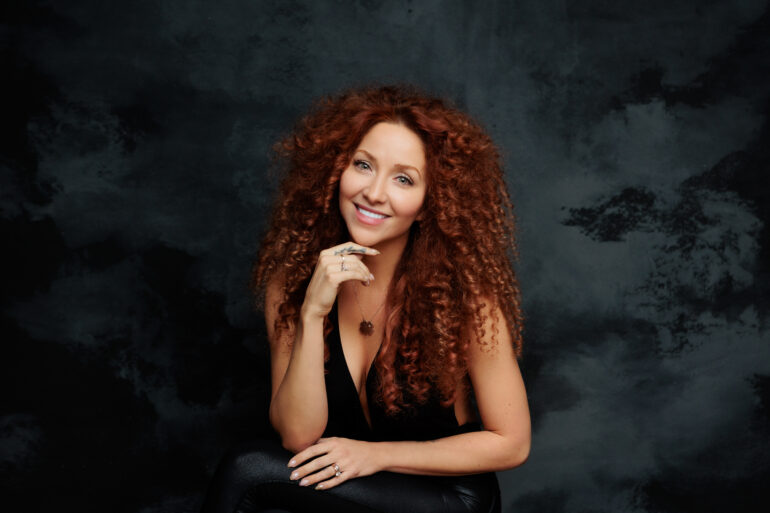
Ashlieya Mariano, known to many as Lieya, is proof that creativity is more than performance—it’s power. With a foundation rooted in the performing arts, she has dedicated her life to helping young people discover their voice, their confidence, and their purpose. As the owner of Dance Masters Performing Arts Studio, Lieya has mentored and trained the next generation of performers, instilling discipline, self-expression, and resilience in every student who walks through her doors. But she didn’t stop at the stage.
Recognizing the deeper needs of children and families in underserved communities, Lieya expanded her mission beyond the studio and founded Builders Of A Better World, a nonprofit focused on social-emotional learning, creative arts education, and leadership development. Through this organization, she’s creating tangible pathways for young people to thrive—not just creatively, but emotionally and socially. Now, as she looks toward the future, Lieya is inviting others to join her in building something bigger than any one performance: a movement rooted in service, empowerment, and lasting community impact.
You began your journey in the performing arts. At what point did you realize your work was about more than performance—it was about impact?
Performance is inherently impactful. It grows the performer because you cannot step into that degree of visibility without the experience being significant. I love performing! That’s why one would continue to do it. It transforms the observer in the audience often because art evokes feelings. There is an exchange that happens in a room when something real or inspirational is expressed. It alters both sides.
Early on, I thought I was pursuing craft. Over time, I began to notice what was happening beneath the craft. When I would perform something honest — not polished, not perfect, but honest — people would come up to me and say, “I felt seen,” or “I didn’t know how to articulate that until I watched you.” That stayed with me. And privately, I was changing too. Every time I embodied a character who was braver than I felt, or softer than I allowed myself to be, or more direct than I was comfortable with, something in me expanded. I wasn’t pretending. I was rehearsing capacity.
So when I began working with young people, I already knew the arts could transform them — because they had transformed me. I had lived it. I had felt my own nervous system reorganize under lights, under pressure, under vulnerability. I had experienced what it means to recover from mistakes publicly and realize you survive. That kind of embodied memory changes you.
There wasn’t one single moment where I declared, “This is about impact.” It was a series of moments. A mosaic. A child who stood taller after finishing a monologue. A teenager who stopped apologizing for their voice. An adult who said, “I didn’t know I could be that confident.” An audience member who cried quietly in the back row. Over time, the pattern became undeniable. Performance isn’t just presentation — it is reorganization. It changes how you see yourself. It changes how others see themselves. Applause fades. But the internal shift — the recalibration that says, “I can take up space,” “I can tolerate being seen,” “I can feel deeply and stay regulated” — that stays. That’s when I understood that the arts were never just about performance. They were about expansion. About capacity. About human beings discovering that they are larger than the stories they’ve been telling themselves. And once you see that — once you feel it in your own body — you can’t unsee it.
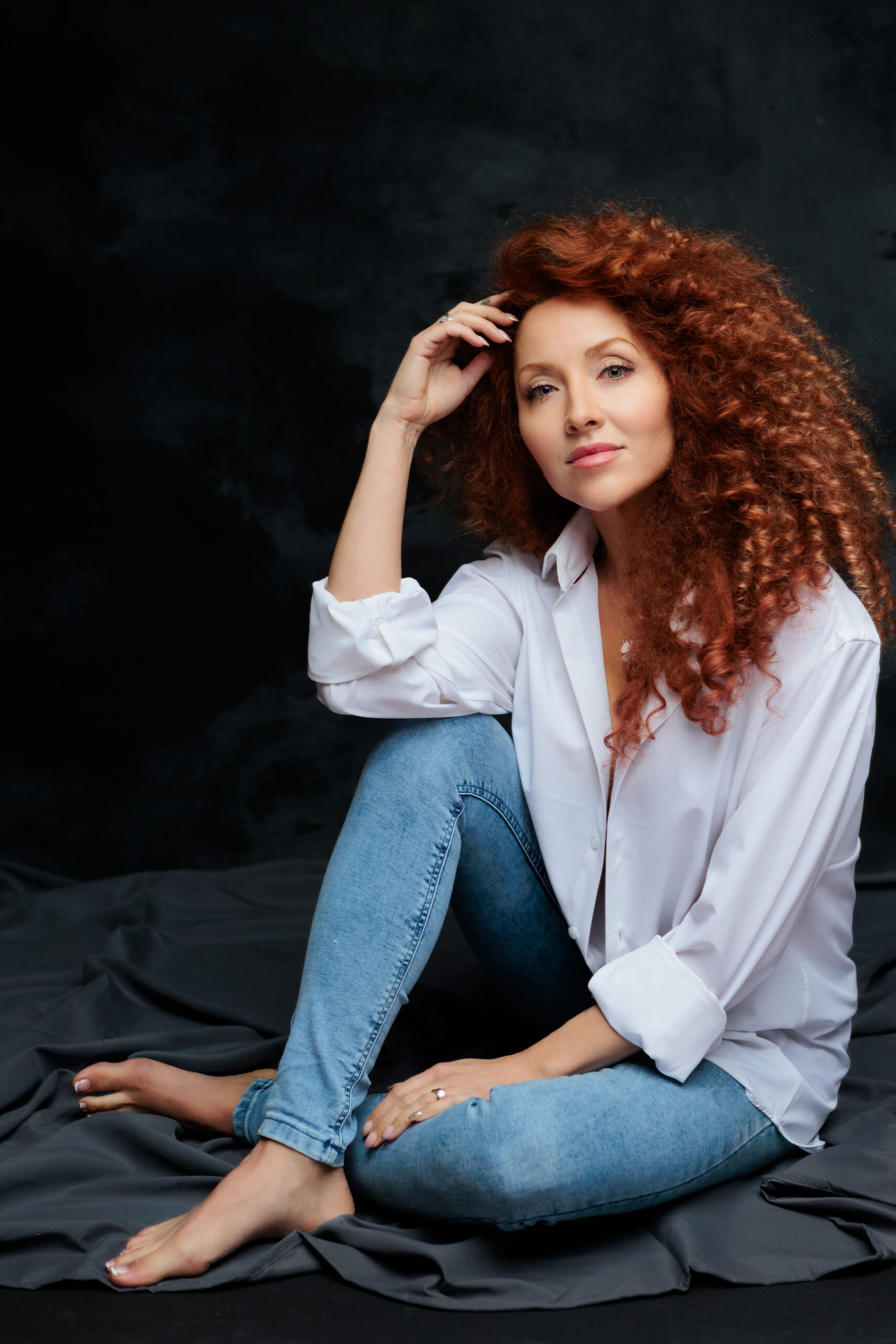
As the owner of Dance Masters Performing Arts Studio, what have you learned about confidence and discipline through mentoring young performers?
Confidence is not a personality trait. It is a pattern the nervous system trusts.Young people simply tend to lack embodied evidence. They have not yet collected enough lived proof that they can fail, recover, try again, and still belong in the room. At Dance Masters, we build that evidence systematically.
Discipline, in its highest form, is devotion. It is choosing alignment over impulse. It is repetition as a form of self-respect. When discipline is paired with emotional safety, it becomes identity strengthening—not obedience. Discipline is embodied identity and the commitment to being most fit for service as it pertains to what I call Whole Wellness or simply ‘Thriving’ — this encompasses all that is a healthy body, mind, and spirit whilst always maintaining an intention to grow.
If I identify as a dancer, I know a dancer practices regularly. I am a dancer because I dance. Dance is a practice that includes physical moment of the body. One needs a healthy mind to have a healthy body. We know that a healthy body contributes to a healthy mind. You align your awareness to this with the intention to do right by your body and mind and you take actions that feed your soul. Understanding the power of choosing your identity reveals that discipline isn’t a chore, its simply your lifestyle as it is attached to your identity. The ownership of the practice and the mastery of self then becomes innate. Learn to enjoy the journey of learning and you’re living your best, most aligned life. Be the dancer. Through rehearsal, students learn that readiness is not a mood. It is a result. That lesson transfers over into every domain of life.
What are some of the most powerful transformations you’ve witnessed in students who stepped into your studio unsure of themselves?
One of the most powerful transformations I witness is when a student shifts from “I hope I’m good enough” to “I understand how growth actually works.” That is a profound psychological shift. It is the movement from insecurity to agency.
Many students arrive believing talent is fixed—that you either have it or you don’t. What they discover through the arts is something much more powerful: competence is built through repetition, attention, and willingness to stay present with discomfort. Once a student understands that ability is trainable, the question is no longer “Am I good enough?” but rather “How do I continue to improve?”
Equally important is helping students develop their own definition of “good.” In a world that constantly imposes external metrics, the arts teach something radically healthier: standards can be internal, values-driven, and authentic. When a student learns to measure themselves against their own growth rather than external comparison, their confidence becomes stable rather than fragile. I’ve watched this transformation manifest physically and neurologically. Collapsed posture becomes grounded presence. Nervous laughter becomes clear articulation. Hypervigilance becomes focused attention. These are not cosmetic changes. They are nervous system adaptations.
When a young person steps onto a stage, their body initially registers it as a threat. The heart rate increases, breathing changes, and the brain activates its stress response. But through rehearsal, exposure, and supportive feedback, the brain learns something new: being seen is survivable.
That realization is monumental. What begins as stage fright becomes regulated performance under pressure, and that is a transferable life skill. The student who learns to breathe through a difficult monologue can later breathe through a job interview, a leadership moment, or a difficult conversation. The first time a student recognizes that the stage will not harm them—that they can stand in front of others and remain intact—is often the moment they stop abandoning themselves when attention is placed on them. That moment builds psychological resilience.
The arts are often described as self-expression, but what I see every day is something deeper: self-discovery through embodiment. Students learn what they feel, how to regulate those feelings, and how to communicate them clearly. As I speak about in my book ‘The Arts As The Way to Emotional Literacy’, I describe the arts through the A.R.T.S. framework as emotional literacy in motion:
Awareness – recognizing internal emotional states
Representation – learning how to express them through voice, movement, and story
Transformation – discovering that emotions can be shaped and directed rather than suppressed
Social Integration – developing empathy and relational intelligence through shared performance
What begins in a rehearsal room rarely stays only there. Students carry these capacities into classrooms, relationships, leadership roles, and professional environments. They become more articulate, more self-assured, and more capable of remaining present under pressure. We are not simply training performers. They are training human beings to stay connected to themselves while being seen by others.
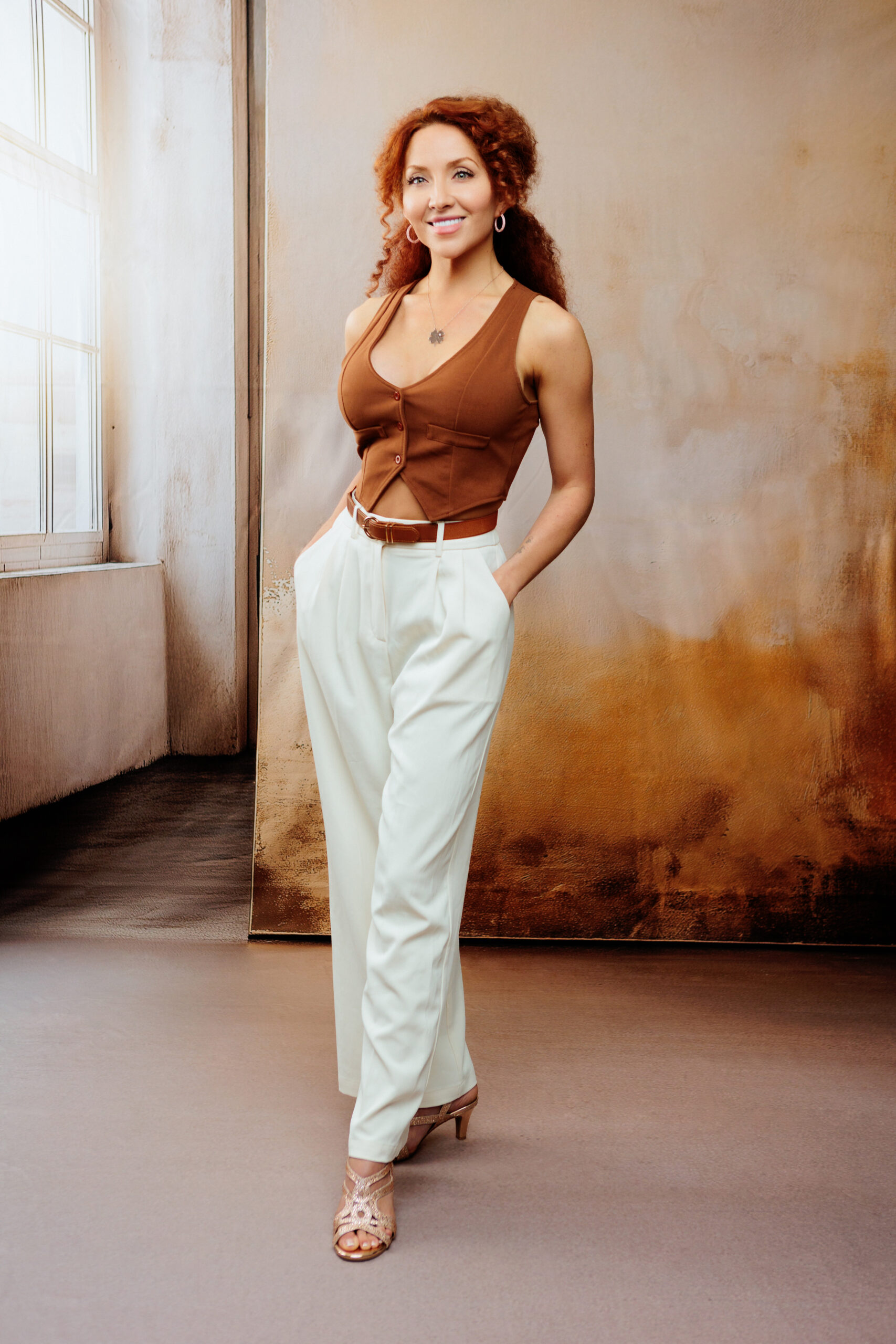
What inspired you to launch Builders Of A Better World, and how did that idea evolve from a vision into a nonprofit organization?
My personal mission and purpose is to be of service— to be a positive influence. I realized that I needed to be most fit for service in order to optimally contribute. Through my own being and doing, I can help people understand that the best way to contribute outwardly is by being as well as you can be internally. In order to build the best world, you must build your best self. Builders Of A Better World is an extension of that message and intention. I was already essentially running my corporation Dance Masters Performing Arts as a nonprofit and so it made sense to create the entity that could genuinely be that.
Builders of a Better World began as a moral interruption as well as a movement for radically authentic recalibrations of internal narratives so that we may take responsibility for how we contribute to our communities. I could no longer accept that creative education is treated as a luxury when it is foundational to identity and emotional development. I had seen too many brilliant children lack access—not because of talent, but because of economics. That gap demanded structure. The nonprofit is my public promise: creativity, belonging, and emotional literacy are not privileges. They are essential architecture for a healthy society.
How does social-emotional learning intersect with the arts in your programming?
I write and Speak about this a lot— as often as I can really. SEL was a at the core of our original purpose when creating and providing school programs. In our programming, social-emotional learning is not a separate curriculum. It is embedded in the process of creation and all that we do. I’ve created so much curriculum around utilizing the Arts to develop Emotional Literacy. SEL is a component of Emotional Literacy. From my book “Arts-based training accelerates emotional literacy not because artistic content is inherently emotional, but because artistic processes mirror the fundamental mechanics of adaptive regulation. They require state awareness, symbolic representation, dynamic modulation, and interpersonal coordination. Emotional literacy develops through the recursive interaction of: Awareness — detecting internal state, Representation — externalizing experience, Transformation — modulating state, • Social Integration — stabilizing through relational feedback. The arts provide a natural architecture for this developmental cycle.”
Rehearsal trains regulation. Performance trains resilience. Collaboration trains empathy. The arts make emotions workable. They teach children how to feel without being overwhelmed, how to express without exploding, and how to remain present in uncertainty. That is emotional intelligence in motion. I feel so strongly about the importance of truly understanding and implementing Social-Emotional Learning and Emotional Literacy in the education systems offered for children and adults, as I believe it is what makes healthy, happy, well-regulated humans. Therefore, it should be considered essential and provided in any classroom or learning domain. I argue that the Arts are the most efficient environments for that development to take place.
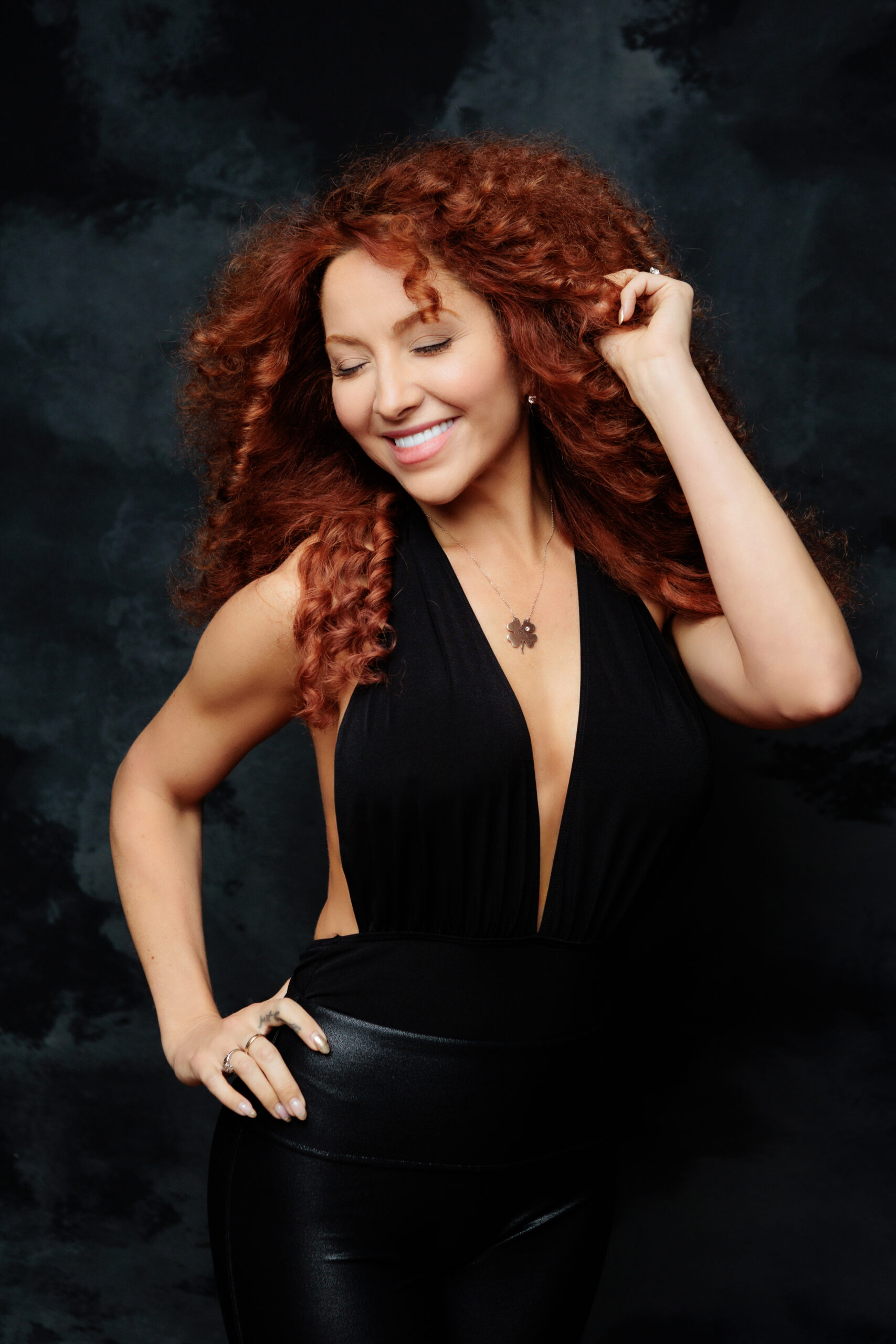
Many children in underserved communities lack access to creative outlets. Why do you believe arts education is essential—not optional—for youth development?
Creativity is Emotional Wellness. That is the purpose of my recent book— to help people understand the significance of intentionally structuring programs that aide with Emotionally Literacy so humans can truly thrive. From my book “At its most functional level, emotional literacy refers to a set of capacities that govern how individuals perceive, interpret, regulate, and express internal states. These capacities operate continuously, shaping decision-making, relationships, attention, behavior, and physiological stability. When emotional literacy is high, experience feels navigable. When it is low, individuals often experience confusion, reactivity, chronic stress, interpersonal friction, or a persistent sense of being internally overrun by states they cannot effectively manage.” The arts are not enrichment—they are infrastructure.
Creative training develops attention, impulse regulation, identity coherence, and social belonging. Without safe outlets for expression, complexity often manifests as behavioral struggle or withdrawal. Arts education builds protective factors: mentorship, community, mastery, and meaning. It equips young people not only to survive—but to experience aliveness while doing so. We should be THRIVING in our lives. Not just existing or unconsciously stumbling through.
Leadership is a key component of your nonprofit’s mission. What does leadership look like for the next generation?
Leadership is being the example of embodied, unwavering coherence. When I speak about leadership in this way, I am referring to a state in which a person’s internal experience, values, communication, and actions are aligned rather than fragmented. A leader’s presence itself becomes organizing. People feel safer, communication becomes clearer, and collective work becomes more effective. It is the ability to regulate, to communicate clearly, to collaborate across difference, and to hold responsibility without the practice of judgment and criticism.
Regulation is the capacity to remain aware of internal reactions while still choosing constructive responses. In group environments—whether classrooms, creative spaces, or organizations—this skill is foundational. A dysregulated leader spreads instability. A regulated leader spreads clarity.
Leadership requires the ability to articulate ideas clearly, listen deeply, and translate complex internal thoughts into language that others can understand. Young leaders must learn that communication is not simply speaking—it is creating shared understanding. The performing arts are uniquely powerful in developing this capacity because they train voice, presence, timing, and emotional expression simultaneously.
The next generation is inheriting a world that is culturally, ideologically, and experientially diverse. Leadership cannot function in an environment where difference is automatically interpreted as conflict. Leaders must have the ability to work productively with people who think differently, communicate differently, and come from different backgrounds. We teach leadership as internal alignment: showing up consistently, caring for the collective, speaking with courage, and refining one’s craft in service of something larger than ego.

As someone balancing acting, business ownership, and nonprofit leadership, what drives you personally to keep building at this level?
I am driven by human potential. I am driven by my own definition of what it means to truly thrive. I am driven by the understanding that I don’t have everything figured out, so growth and expansion must remain continuous, no matter the specifics of my journey on any given day. I am driven by the impact that I have personally experienced from others sharing their work for me to benefit from. Therefore, I am driven to in turn, share mine.
Writing, Filmmaking, and Acting allow me to metabolize and share about the human experience through story. Business allows my vision to become scalable structure and provide personal livelihood. Nonprofit work ensures access is not limited by privilege or circumstance and is more widely embraced as something others can contribute to.
I am building an ethically established architecture that will outlast me. “Be the change you wish to see in the world.” I am driven by the great leaders who came before me.
What are your goals for Builders Of A Better World in the coming year, and how can individuals support that growth?
We love all types of volunteers. People could help by providing additional fundraising avenues for more money. Our goals are focused: expand scholarship access, deepen programming quality, and strengthen community partnerships. We aim to increase transportation access, scale summer and home-school programs, and integrate deeper emotional literacy/social-emotional frameworks. Individuals can support by sponsoring a child, partnering organizationally, or funding operational infrastructure. Sustainable impact requires structural backing and of course financing.
If a young person watching this interview feels unseen or uncertain about their potential, what would you want them to know?
If a young person watching this interview feels unseen or uncertain about their potential, the first thing I would want them to know is that uncertainty about who you are is not a flaw—it is the beginning of discovery. Human beings are not born knowing their capacity. Capacity is revealed through experience, through effort, through moments where you try something difficult and realize you survived it. Most people who eventually become confident did not start that way. They became confident because they stayed present long enough to discover what they were capable of.
Feeling unseen is also more common than most people realize. Many extraordinary individuals spent long periods of their lives feeling misunderstood, underestimated, or invisible. What eventually distinguished them was not immediate recognition. It was their decision to continue developing themselves even when no one was applauding.
Your potential is not something someone else hands you. It is something you uncover by participating in your own life. This is why I care so deeply about the arts, creativity, and expression. They give young people a structured environment where they can safely experiment with identity. You can try on confidence before you fully feel it. You can speak before you are certain your voice matters. You can move, perform, write, and create while you are still figuring out who you are becoming.
And something remarkable happens when you do that. Your self-perception expands.
The first time you finish something difficult—whether it is a performance, a project, a conversation, or a challenge you were afraid of—you gather evidence that you are more capable than you previously believed. That evidence accumulates. Over time it reshapes how you see yourself.
I would also want them to understand something very important: the world does not need more people who hide their uniqueness in order to fit in. The world progresses because individuals eventually decide to develop the parts of themselves that are different, curious, creative, and courageous. Every major contribution to humanity began with someone who explored their curiosity deeply enough to share it.
So if you feel unseen right now, it does not mean you lack value. It may simply mean you have not yet found the environment that allows you to express it. Seek spaces where growth is encouraged. Seek mentors who challenge you and believe in you. Seek disciplines that help you discover what you are capable of—whether that is art, science, athletics, storytelling, engineering, or something entirely new.
Most importantly, do not abandon yourself before your story has had time to unfold.
Human beings are remarkably adaptive. We are capable of learning new skills, building confidence, strengthening our minds and bodies, and contributing meaningfully to the world far beyond what we initially imagine. The most powerful realization a young person can have is this:
Your potential is not fixed. It is expandable. And the moment you begin to explore it—with curiosity, courage, and commitment—you start becoming someone even you did not yet know was possible. You do not need permission to begin. You need commitment. Protect your light. Train it. Give it structure. Keep going. The world shifts when an unseen person refuses to diminish themselves.
Instagram: @Ashlieya_
Photos: @AlysonBerg_Photography